When FIFA tried to introduce four quarters for USA 94, but were blocked by UEFA
Hydration breaks have gone down badly at the 2026 World Cup, but splitting matches into four has been in the works for longer than you might think
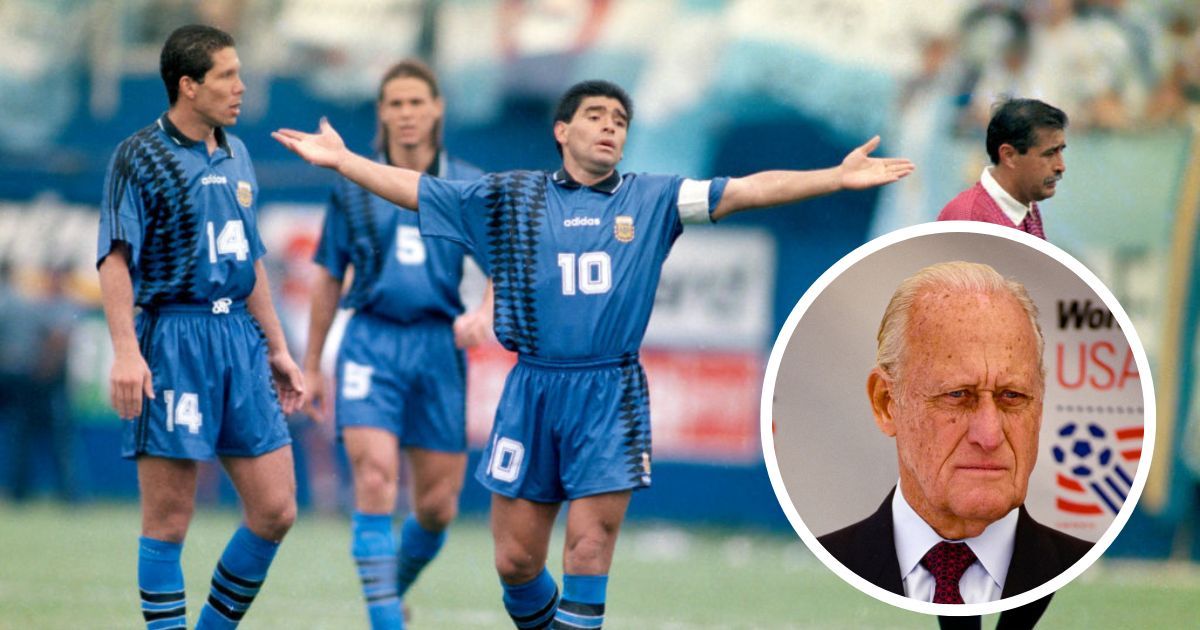
The early to mid 1990s were something of a wild era in football history. The sport was trying to crack the lucrative American market via the ‘94 World Cup, but American television networks were terrified of a sport with 45 minutes of uninterrupted play and absolutely zero commercial breaks.
FIFA were also panicking after Italia '90, which remains one of the lowest-scoring, most defensively cynical World Cups in history, averaging a measly 2.21 goals per game and featuring a dreadful, foul-heavy final.
To ‘fix’ the game for American audiences and increase goals, FIFA seriously considered several radical changes. Four 25-Minute Quarters was one…
Play our FREE match predictor and win £1k
In 1990 FIFA tried to introduce 25-minute quarters to accomodate TV networks
Brazilian goalkeeper Taffarel consoles Franco Baresi of Italy after the World Cup final of 1994 (Image credit: Mark Leech/Offside via Getty Images)In March 1990, FIFA President João Havelange dropped a bombshell by suggesting football abandon its traditional two 45-minute halves in favour of four 25-minute quarters. The Goal? To blatantly accommodate American television networks like ABC and ESPN, who held the 1994 rights.
Television executives believed that without regular stoppages, the tournament would become a massive financial risk because there wasn’t enough space for commercials. Naturally, purists went ballistic.
(Image credit: Unknown)UEFA, backed heavily by the traditionalist British Home Associations on the International Football Association Board (IFAB), fiercely guarded the sanctity of the game's clock and flatly refused to butcher football’s structure for advertising dollars.
Incredibly, making the goals bigger was also proposed. FIFA openly debated increasing the space between goalposts by a few inches to give strikers an advantage. That idea was also ultimately shot down by UEFA and IFAB.
With clock changes and goal sizes sacrosanct, FIFA and IFAB had to find other ways to incentivise attacking football for USA '94. This resulted in rules we take for granted today like the back-pass rule, introduced in 1992 after a particularly tedious Euros final in Sweden.
USA '94 was the first World Cup where goalkeepers were banned from picking up deliberate back-passes from their teammates' feet. It completely eliminated the Italia '90 and Euro ‘92 tactic of wasting time by passing back to the keeper.
Three points for a win was introduced in 1981 but didn’t come into effect until USA ‘94. Designed to discourage teams from playing for a boring 0–0, the group stages in America awarded three points for a win instead of two for the first time in World Cup history.
Another first was that referees were allowed to wear colours other than traditional black (usually bright yellow, pink, or white) to avoid clashing with teams, and players finally had their names printed on the back of their jerseys.
Ultimately, the compromise worked. USA '94 became a massive commercial success, shattered attendance records that still stand today, and averaged a much healthier 2.71 goals per game — all without a single commercial break during play.
FourFourTwo
Du liest eine Vorschau. Den ganzen Artikel gibt es bei der Quelle.