विश्व कप 2026: हैती के लिए मैदान पर हार, लेकिन एक दुखी राष्ट्र के लिए जीत।
हैती विश्व कप से बिना किसी अंक के बाहर हो गया, लेकिन उसके खिलाड़ियों और प्रशंसकों के दिलों में कुछ ऐसे पल रह गए जो हमेशा के लिए अंकित हो जाएंगे।
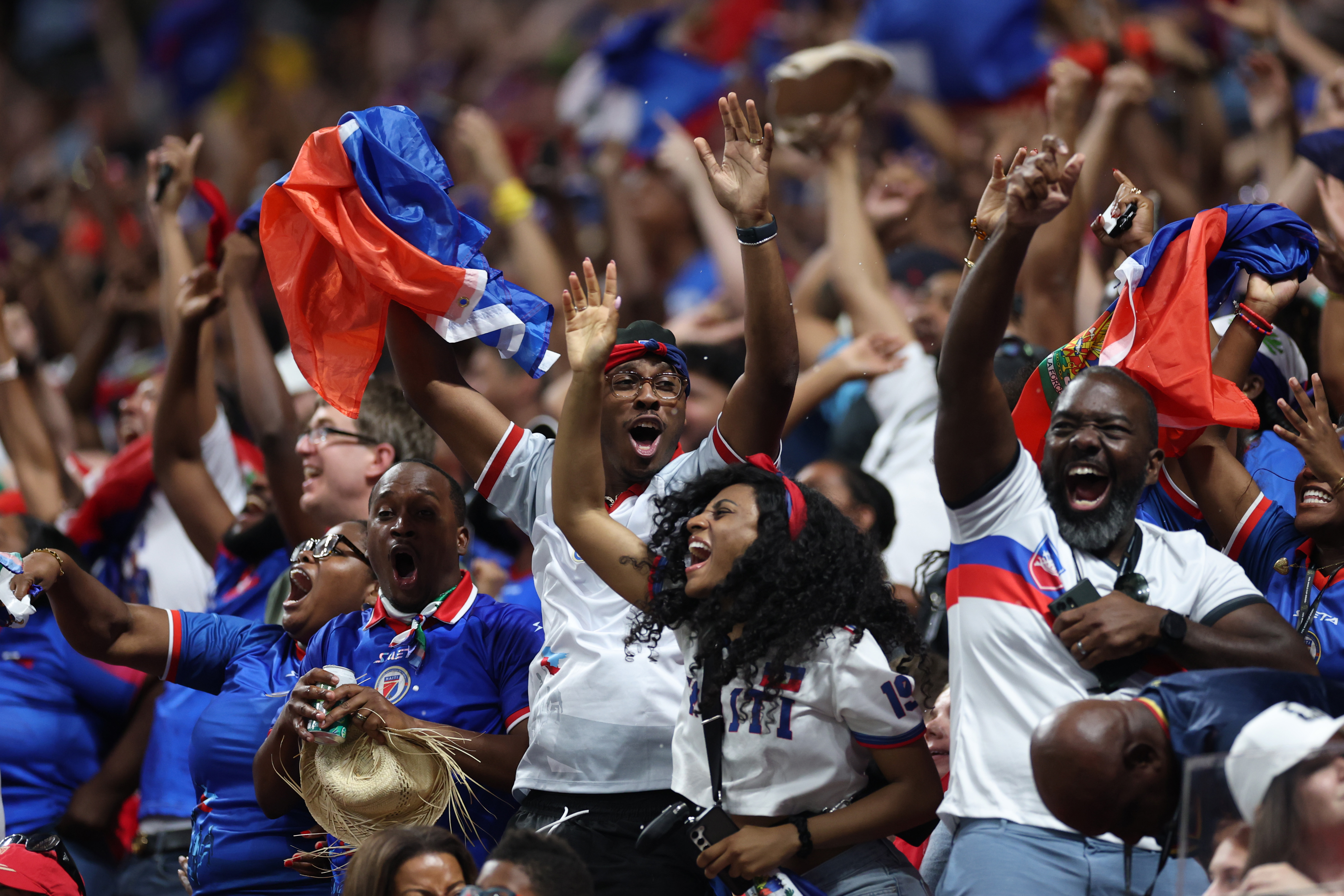
ATLANTA — It was a tiny move, really, just a flick of a heel. But the heel redirected a ball into a net, and a nation in desperate need of some good news exploded in delirious delight.
Haiti fell to Morocco 4-2 on Wednesday night in Atlanta, eliminated in the group stage. But that’s not the real story for Les Grenadiers, who exit the World Cup with a record of zero wins, zero draws and three losses. The real story is the miracle that Haiti — at No. 87, the lowest-ranked team in the tournament — even reached this World Cup at all, and still closed off its run with 45 of the finest minutes of soccer in the nation’s history.
It’s been a long, winding half-century-plus since Haiti last reached the World Cup. From natural disasters to rampant crime, political strife all the way down to a banned uniform three weeks ago, Haiti’s players and fans have had to endure more than virtually any nation on earth. So it’s understandable why the masses in blue and red gathered in the Atlanta Stadium stands were celebrating long before kickoff, dancing to familiar tunes like “Toup Pou Yo,” by Haiti’s own Barikad Crew … and why a goal just minutes into the game sent them into ecstasy.
Buoyed by the crowd, wanting to put on one last show, Les Grenadiers came out sprinting, and caught the mighty Morocco on their heels. Ten minutes into the match, Jean-Kevin Duverne raced down the right side of the pitch, sent a booming cross toward the goal, and Lenny Joseph tapped it in, off Morocco goalie Yassine Bounou’s back, with a flick of his right heel.
HAITI SCORES ITS FIRST GOAL OF THE TOURNAMENT 🇭🇹
— FOX Soccer (@FOXSoccer) June 24, 2026
It's Lenny Joseph who finds the back of the net pic.twitter.com/hOpnrfsZji
That wasn’t just Haiti’s first goal of the game. It was Haiti’s first goal of the tournament, meaning it was Haiti’s first World Cup goal in more than half a century. The fans in the Atlanta Stadium stands let loose 52 years of frustration, cheering loud enough to peel back the petals on the stadium’s retractable roof.
And then, just over 30 minutes later, they got to do it all over again, when Wilson Isidor fired a long-distance strike for one of the most cinematic goals of the tournament to date:
OH MY ISIDOR!!!
— FOX Sports (@FOXSports) June 24, 2026
HE SCORES AN ABSOLUTE SCREAMER TO PUT HAITI BACK IN FRONT OVER MOROCCO 🇭🇹 pic.twitter.com/i1IWQBQSsV
At the same time, for nearly 40 minutes, goalie Johny Placide was nothing short of magnificent, blocking shot after Morocco shot, each brilliant defense ratcheting up the joy of the crowd. His magic ran out in the 39th minute, and he would go on to surrender four goals in all. But still, now and forever, there was that “2” beside Haiti’s name.
They were both goals in an ultimately losing effort, yes. But they meant so much more than a number on a scoreboard.
“We all hoped to bring joy to the Haitian people, because they deserve it,” Isidor said in French after the match. “And I hope the two goals we scored today made them proud.”
The nation of Haiti is a land under siege, torn apart from within by gang warfare. According to a recent United Nations report, more than 1,600 Haitians were killed in the first three months of 2026, with another 700-plus injured. More than 1.5 million Haitians have been displaced from their homes, according to the International Organization for Migration.
Even stories of good news in Haiti turn grim. Haiti’s primary stadium and the national team’s onetime home, Stade Sylvio Cator in Port-Au-Prince, was heavily damaged in the devastating 2010 earthquake that destroyed so much of the nation. At the time, FIFA pledged $3 million to help rebuild the stadium and the nation’s soccer infrastructure.
Since then, though, as Haiti has descended into lawlessness and anarchy, the stadium has fallen into the hands of local gangs. Fields around Port-Au-Prince once used for soccer are now encampments. As a result, Haiti has had to play its “home” matches in Curaçao, several hundred miles away over water.
Fans of Haiti celebrate the team's first goal during the FIFA World Cup 2026 Group C match between Morocco and Haiti at Atlanta Stadium on June 24, 2026 in Atlanta, Georgia.Ezra Shaw - FIFA via Getty ImagesThe situation on the ground in Haiti is so dire that Haiti’s manager, Sébastien Migné, has never even set foot in the country despite leading the team for the past two years. "It's impossible because it's too dangerous," he told France Football magazine last year. "I usually live in the countries where I work, but I can't here. There are no more international flights landing there.”
Unable to assess in-country talent in person, Migné and his team searched out players of Haitian descent like Isidor, who was born in France to Haitian parents, and only committed to the Haitian team in March. Of Haiti’s 26 players, just 10 were born in the nation, and only one — midfielder Woodensky Pierre — plays for a Haitian club. National team officials scouted him via video of his play in youth leagues.
Haiti qualified for this year’s World Cup by winning their group in CONCACAF qualifying despite a lowly international ranking. Les Grenadiers then lost their first two matches of the 2026 World Cup to Brazil and Scotland, failing to score a goal in either outing, and thus were eliminated before Wednesday’s match even began. With the loss, Haiti has now matched a dubious World Cup record held by El Salvador — six matches, six losses, zero points recorded. El Salvador struggled through the 1970 and 1982 World Cups, while Haiti has spread this streak of futility across more than half a century.
Before this year, Haiti had exactly one appearance in the World Cup, the brief stay 52 years ago in 1974. That year, Haiti also exited quickly, losing all three games by a combined score of 14-2. It’s been a lifelong heartbreak for the nation’s devoted soccer fans, who have had to watch as their fellow Caribbean nations — Cuba, Curaçao, Haiti, Jamaica and Trinidad and Tobago — have all managed at least one point via draw. But they’ve kept faith, and nights like Wednesday are why.
“My grandfather saw that goal back in 1974. He was very proud, and he told me I’d be the next one to do it,” Isidor said. “Today, I’m proud of that. And I know he’s proud of me.”
After the match, a Haiti fan by the name of Jonas Guillame, waiting near a massive Atlanta Stadium merch line, mused on the state of his home country. “It's not too good. It's very difficult. We don't even have a stadium. We never play a match in our hometown, but we still made it here,” he said. “I didn't see this in 1974. It's my first time seeing my team playing in a World Cup. I love it. It means a lot to me.”
“These matches will be forever etched in the history of the national team and in my heart,” Placide said in French. “We haven't taken the team to the World Cup in 52 years. I hope that next time, we’ll make it to the World Cup sooner.”
“We scored two goals. We're really proud of that. Emotions were running high,” Isidor said. “But it's still frustrating, because we didn't get a point. With the generation we have, I'm confident in saying that in four years, we'll be back here to earn our first World Cup point.”
Yahoo Sports Soccer
आप एक झलक देख रहे हैं। पूरी ख़बर स्रोत पर पढ़ें।